Don’t idolise DPI. Enable countries to build national data exchange infrastructure that makes data exchange DPIs useful.
Digital Public Infrastructure (DPI) has become one of the most influential ideas in digital development. Digital identity, payments and data exchange are increasingly described as the foundational “rails” upon which countries can build digital services. The metaphor is powerful, but it can also become limiting.
A country’s data challenge is bigger than digital technology or digital infrastructure. Our countries face fragmented data ecosystems, disconnected institutions, incompatible standards, weak governance arrangements, uneven capacity, limited trust and datasets that often cannot easily be discovered, accessed, combined or reused.
Technologies such as DPI can connect systems. It cannot, by itself, fix the ecosystem in which those systems operate.
This is why we should be careful not to idolise DPI as the solution to every development problem.
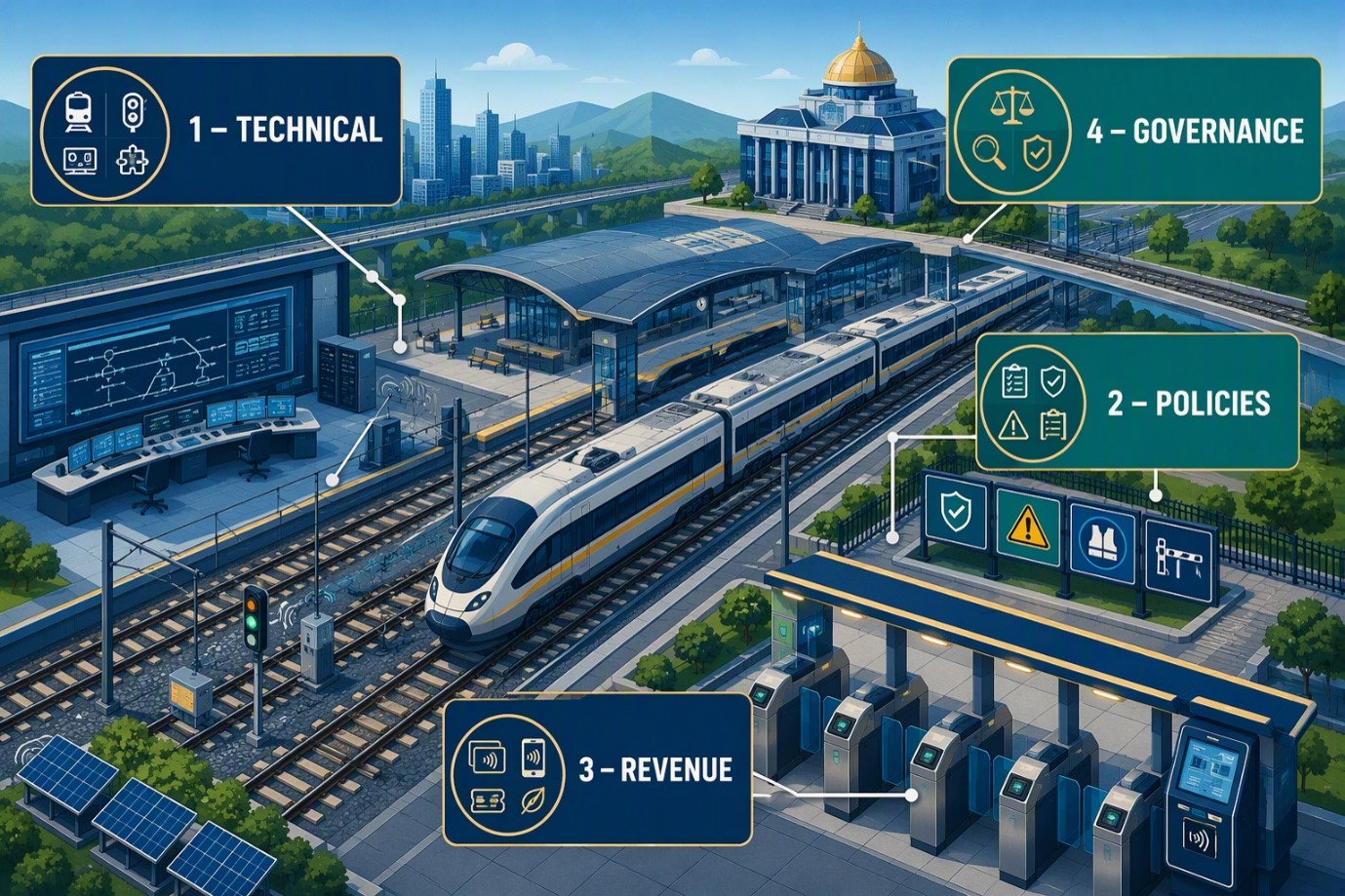
The railway infrastructure is more than the rails
Data exchange technologies are essential. Countries need secure mechanisms through which authorised institutions can exchange information. But procuring and installing exchange technology does not automatically create a functioning national data ecosystem. A safe and functioning rail system is not simply two steel rails. It requires stations, signalling systems, standards, governance, operators, maintenance regimes, safety rules and institutions that determine who can use the network and under what conditions.
National data systems are no different. Countries need more than data exchange rails. They need both the institutional and technical environment that work in tandem to allow trusted data to be governed, discovered, accessed, exchanged, integrated and reused responsibly across sectors. This is the case for a National Data Exchange Infrastructure (NDEI).
From DPI components to national infrastructure
NDEI shifts the question from: “which DPI should we deploy?” to “what national infrastructure do we need so that trusted data can move securely across institutions, sectors and services?” This changes the unit of thinking. Instead of treating identity, payments, and data exchange as separate digital infrastructure projects, NDEI puts the national data ecosystem at the centre. Digital ID then becomes an important national data asset and capability within the data ecosystem of countries. Agricultural, health, business, climate, energy, geospatial and administrative datasets become part of a broader national data environment.
Data exchange technology or data exchange DPI remains critical, but it becomes an enabling layer rather than the destination.
Beyond the rails
The next phase of any country’s digitalisation journey should therefore not be a competition to create more categories of DPI. It should be about building coherent national exchange infrastructure for data that enables institutions and sectors to use data securely, responsibly and productively. DPI has helped the world recognise the importance of shared digital foundations. That is an important achievement. But foundations are valuable because of what can be built upon them. Let us invest in the rails but let us not mistake the rails for the rail infrastructure.
For countries, the bigger opportunity is to move beyond the rails – from individual DPI components towards National Data Exchange Infrastructure that connects institutions and technical systems as part of one national ecosystem for data.
